Original Text ©2022, Karen Lynn-Chlup. All rights reserved.
As the bus continued its journey from her new home to her school, Karen recalled when she first met Mrs. Pinzetti, the physical therapist who replaced Mrs. Schmidt.
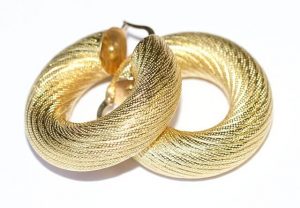
The new physical therapist was a nice lady with a kind manner. Mrs. Pinzetti always dressed well and wore perfume, makeup, and big golden hoop earrings. She usually wore a sweater with slacks under her white coat with the Physical Therapy patch on the left shoulder. Athena Pinzetti was beautiful, so beautiful that a sculptor could have chiseled her out of marble. Her thick, black hair was styled in a fashionable contour cut, with the back shorter than the sides. She had an olive complexion and thick, lush lips. She also had a round scar below her high left cheekbone. It was not a birthmark, but a small area on the surface of her skin that stood out, so unusual in color and form that people stared at it.
She stretched Kitten’s left arm and leg gently, and she promised never to hurt her. She called her Sugar and treated her with the greatest respect. Karen thought she was almost as wonderful as Miss Kimiko. However, as nice as Mrs. Pinzetti was, she did not have Miss Kimiko’s happy spirit. Her sullen, resentful irritability came and went. As time passed, she developed a dry cough and began clearing her throat constantly. Karen wondered if the smog were bothering her. One wrong word or a frown set off her temper. Her voice became whiny and demanding, and as she became more negative her constant use of the phrase, “Please come this way with me,” became a snarl.
Original Text ©2022, Karen Lynn-Chlup. All rights reserved.
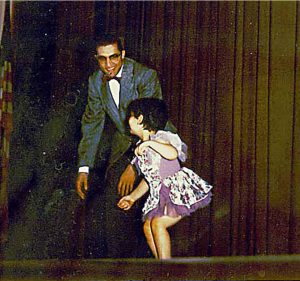
 In this scene, little Kitten learns to tie her shoelaces, which is a challenge for many people, but remember that she has to do it with only one hand.
A few weeks later, Miss Kimiko taught her to tie her own shoes. Mama had tried for years to teach her, but she had not had the right techniques and tools to help Kitten master this task.
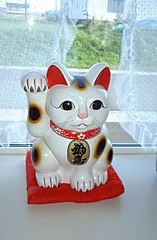
“Hi Maneki Neko,” Miss Kimiko said to welcome Kitten. Maneki Neko meant lucky cat in Japanese. When Miss Kimiko spoke those words, Karen’s heart always lit up.
“Hi, Miss Kimiko,” Karen replied with her biggest smile. Miss Kimiko allowed Kitten to call her by her first name because there was a warm bond between them. Karen would always treat her with dignity and respect, just as she treated Karen.
“I am so glad to see you, today, Kitten. You are looking chipper, as always!”
“That’s because I’m here to see you, today!” Karen replied. “Am I still going to learn how to tie my shoes?”
“Ah, yes, you sure are. You are going to be the best shoelace tier in the greater L.A. area,” she kidded.
“What are we waiting for?” Karen asked in an imitation of Mr. Hinton’s voice. Miss Kimiko knew Mr. Hinton, and they both laughed.
Quietly settling Karen into a chair at the table, Miss Kimiko put a square of plywood in front of her. It had a leather shoe stapled to it, so that Kitten could practice tying her shoelaces without bending over to the floor.
“You take the two ends of the shoe laces, fold them over and under twice until nice and tight. Then you make one rabbit ear…”
Karen listened and watched carefully. After several tries, she mastered the skill of tying her shoelaces, and so Miss Kimiko taught her many of the basic skills of independent living.
Original Text ©2022, Karen Lynn-Chlup. All rights reserved.
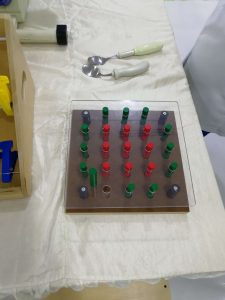
In contrast to Mondays, Thursday mornings could not come fast enough for Kitten. She looked forward to her weekly session with Miss Kimiko, the occupational therapist. It was like going to playtime with Tammy. Unlike the gloomy PT room, the occupational therapy room was filled with light that came through its spotless windows. The kitchenette with its chairs and table was spotless. The toys that helped her build dexterity were always clean. The floor was polished. The room had a feeling of quiet peacefulness that contrasted happily with the gloom and sullenness of the physical therapy room.
Miss Kimiko, the occupational therapist, wore her black, shoulder length hair in a stylish flip and outlined her brown eyes with medium black eyeliner that made them look bigger. She stood less than five feet tall and had a medium build. Unlike Mrs. Schmidt, she wore a neatly pressed cotton uniform. Even more unlike Mrs. Schmidt, she always smiled broadly and welcomed Kitten to each of their sessions. At every session, Karen learned something new and felt inspired to learn more.
One week, Miss Kimiko gave Karen two plastic squeeze bottles. They were connected by a flexible tube that went through their lids. The one that Miss Kimiko put into her left hand was full of water and heavy. The one for her right hand was empty and light. When Kitten automatically tried to trade the bottles, so that her strong right hand would hold the heavy one, Miss Kimiko gently stopped her by holding her wrists.
“Okay, Kitten, today we will play with these bottles. This will make your left hand stronger and help you learn to use both hands together. Okay? Does that sound like fun to you? You have a habit of using your right hand for everything, but today we want your left hand do the work. We will make it a strong hand, too. Okay? You can pretend you are squeezing chocolate icing onto a cake. That will make it lots of fun. Okay?”
Karen smiled and agreed. In a flash, she realized what Miss Kimiko meant about relying on her right hand. This was a turning point for her. Even though she knew that her left hand would never become as strong as her right, she was inspired to use it, and it did get stronger.
Original Text ©2022, Karen Lynn-Chlup. All rights reserved.
Karen brought her mind back to the bus ride. The new house is a lot farther from school. We still have a long way to go.
The evening after her disastrous physical therapy session with Mrs. Schmidt, Mama had given her an aspirin and put her to bed with their heating pad on her throbbing knee.
Mama sat on the edge of the bed and hugged her, while Kitten told her what had happened.
“Mama, I wonder whether Mrs. Schmidt’s treatments are helping me or hurting me. My muscles always feel tighter, afterward, and they should be looser.”
Then she told Mama about Mrs. Schmidt and the Nazis, and about learning to deal with reality and bearing pain and accepting being inferior and helpless.
Mama’s face turned a deep gray, and she slowly stood.
“I thought this was all over—the Nazis and the cruelty and the torture and the anti-Semitism. I can’t believe that this Mrs. Schmidt can treat you this way and brag about her Nazi sympathies, too. How can she get away with this? With you or with anyone? You would think she’d be fired. I cannot understand why the school is employing a person with Mrs. Schmidt’s beliefs, especially to work with handicapped children. I understand that Mrs. Schmidt’s sad childhood may have shaped her ideas about life, but her cruelty is unconscionable.”
Karen replied that she felt she understood Mrs. Schmidt. She would treat Mrs. Schmidt more compassionately. She did not take Mrs. Schmidt’s behavior personally. She would treat Mrs. Schmidt with kindness, as one would a sick person.
“It’s time for you to sleep, my Krana Layala. You are in pain, and your body has been injured. You must rest so you can get up in the morning and do your best at school. You have high ideals, but I must be a realist. I promise that you won’t have to deal with this poor, sick Mrs. Schmidt much longer. You may have some handicaps, but she is completely wrong about you being inferior, and about you having to accept anything you don’t want to. You go to sleep, now. I need to call Mrs. Sinclair and talk this over with her.”
Original Text ©2022, Karen Lynn-Chlup. All rights reserved.

“Karen, have a seat on the gray mat. We have a lot to do, today,” Mrs. Schmidt said with a sneer. “And please remember to remove your shoes.”
Karen looked at Mrs. Schmidt with a neutral expression, as if she had heard nothing from the hallway. She ignored the implied insult that she could not remember to remove her shoes before stepping onto the mat. Thick and gray, it rested on a wooden platform, three inches above the floor and a yard from the door. Karen sat and removed her James and Williams high-top brace shoes. After coming to Mrs. Schmidt for a month and a half, she knew what would happen, next, and that she would come out of the therapy session feeling like a half-ton pickup truck that had been hit by a thousand-ton locomotive.
Without looking up, Karen slipped off her brace and right high-top shoe, and then lay down on her back. Mrs. Schmidt sat down hard beside her. Karen noticed that Mrs. Schmidt always left her own shoes on. Perhaps the laced, two-inch heels were hard for her to get off and on, or perhaps wearing them gave her a sense of power.
Mrs. Schmidt straightened one of her own legs, and then grasped Karen’s disabled left hand. After pulling Karen’s arm as straight as she could, she placed Karen’s elbow on her thigh. Using her thigh as a fulcrum, she pressed down on Karen’s wrist, forcing Karen’s elbow to straighten all the way, and then bending the left wrist and fingers back to hyper-extend them.
“Oh, boy!” Karen said softly, in a tone of mock eagerness, then, “Ouch! That hurts! Can you be a little gentler with me, please?”
Mrs. Schmidt smiled in her hard way and looked Karen in the eye.
“You cannot always have your way, my dear girl! Life is about dealing with pain. You have to learn how to handle it, sometime. You’ve been sheltered too much. You have not lived a life like mine. Once, I was a child, too, and I saw people destroyed because they were handicapped or weak.”
“Really,” Karen replied in a sympathetic tone. Mama had told her about the Nazis killing handicapped people as well as Jews, so she knew she would have been at the top of the list for the concentration camps.
“Ja! I learned the hard way how the real world works.”
For a moment, Mrs. Schmidt’s voice had softened, and Karen thought she might have reached her emotionally, but then Mrs. Schmidt loaded on more pressure.
Kitten’s left arm felt like a coiled spring being unwound. Other therapists had extended it slowly with little discomfort, but Mrs. Schmidt stretched it quickly and held it straight. Karen forced herself to count the seconds of the three minutes she knew Mrs. Schmidt would hold it straight. Her bicep and elbow burned and stung even after Mrs. Schmidt let go.
“Karen, you are not cooperating with me, today,” Mrs. Schmidt said, her voice hard, again. “I cannot do any more for you with that exercise. Get onto all fours so I can hyperextend your elbow and arrange your fingers from another angle. They look very curled, today. Hurry up! I cannot understand what takes you so long. You are wasting my time. I cannot wait until you are ready. This session is taking too long. I am due for my coffee and cigarette, and I cannot have them until we finish your program. Hurry up, or I’ll report you to Dr. Lambert for not cooperating with your prescribed treatment.”
Kitten stayed quiet and thought about Mrs. Schmidt’s background, as she eased herself into position. Mrs. Schmidt immediately slammed a sandbag onto her left wrist and held it down while forcing the elbow to bend the wrong way and prying the bent fingers straight.
“Ow! Don’t you care that you’re hurting me?” Karen moaned.
“Karen, you must accept your limitations. You must accept that I am being a little rough because your treatment must be like this. If it is not, then it will not be effective. This is the only way your arm and wrist will straighten out. This is the only way to improve their function. You have to toughen up. My job is to help you get tough, even if it hurts a little.”
Karen twisted her neck to look up at Mrs. Schmidt, but found herself stared down by the PT’s angry gaze. She felt rage touch her as the therapist ran her eyes up and down Kitten’s body, glaring particularly hard at the disabled left side. Karen looked toward Mrs. DeLuca, who was working with another student on the other side of the room, but who refused to meet her eyes. The student looked back with sympathy as Mrs. DeLuca gently worked on her, but as a disabled child, she was afraid to speak up. Kitten did not want to cry, so she said nothing.
“I have created this stretching program especially for you, my dear. I have created it based on my own professional experience. I know what is best for you. I must execute these exercises exactly right, regardless of any little discomfort they may give you or me. This is not the time for feelings or compassion. Our bodies are machines, and we must treat them as such. Do you think I enjoy sitting on this mat? No! But I do it to help you.”
Karen tried not to resist. Resistance increased the pain. Suddenly the three minutes were up. Mrs. Schmidt released her arm and wrist as abruptly as she had taken them.
“Now for your last and final exercise, Karen! We are going to stretch your left heel cord.”
Kitten could not stop herself from wincing. This was always the most painful treatment. She rolled from the all fours position and sat on the mat with her legs straight in front of her. Mrs. Schmidt looked deeply into her eyes as she reached for Karen’s left knee and pushed it hard into the mat. Under Mrs. Schmidt’s pressure, the knee bent the wrong way and immediately throbbed with pain. Mrs. Schmidt smiled as she gripped Kitten’s toes with her other hand.
Karen tried to relax, but the coming agony terrified her, and her muscles involuntarily tightened. Mrs. Schmidt squeezed her toes together, so that they hurt. She pulled the toes toward Kitten’s knee, still looking into her eyes with a darkness.. Karen could not look away, in spite of the pain. She felt tears sting and flow down her cheeks. Mrs. Schmidt squeezed and stretched once, then let the toes move back to their normal position. Karen sniffed to keep herself from whimpering. Mrs. Schmidt squeezed and stretched, again, even harder, and the pain increased. The treatment consisted of five stretches, each one more painful than the last.
“Karen, you must try harder not to resist me,” Mrs. Schmidt said, as she released Kitten’s foot and handed her a tissue. “Now dry your tears and go back to class.”
Karen’s eyes stopped tearing. She wiped them and blew her nose. Looking around, she saw that the therapy assistant and the other child were staring at her, their faces full of shock. Mrs. Schmidt was smiling in a relaxed, satisfied way. She looked happier than she had since Kitten had entered the room.
“Why do you smile, Mrs. Schmidt?” Karen asked.
“I smile because I know how much this is going to help you! I know because I know what is necessary to make this therapy work. I know because I’m not afraid to challenge you.”
Mrs. Schmidt struggled to her feet and flung open the hallway door. “Your session is over, young lady. You can leave, now. It is time for my cigarette break. Try to have a better attitude, next time.”
“Thank you, Mrs. Schmidt. You have a very nice day, too!” Kitten replied.
Original Text ©2022, Karen Lynn-Chlup. All rights reserved.