Whispers of Hope – Karen Lynn-Chlup

    Follow Us

How to Launch a Successful Business as an Entrepreneur with a Disability, by Jillian Day

[Editor’s note: Jillian Day created 508Assist.org to help people all across the web make their sites accessible to individuals with disabilities. A close family member, who has a visual impairment, had trouble finding a dinner recipe online that he could read easily. This inspired her to start 508Assist.org. When she’s not chasing after her little ones, Jillian enjoys being outside, whether she’s fishing, hiking, or geocaching with her family.]

How to Launch a Successful Business as an Entrepreneur with a Disability

Entrepreneurs with disabilities often see unmet needs firsthand, which can translate into disability-inclusive entrepreneurship and practical small business opportunities. The tension is real: business ownership challenges can include unpredictable energy, access barriers, benefits concerns, and environments that were not designed for disabled founders. At the same time, many accessible business ventures can be built around lived experience, clear boundaries, and work setups that reduce friction day to day. The goal is a viable business idea that fits capacity, serves a defined market, and can be operated consistently.

Build Your Business Setup Around Your Capacity

This process helps you choose a business type, validate demand, and set up a basic plan and structure you can actually run. It matters because early choices affect your workload, costs, and accessibility options long before you hire help.

  1. Choose a business type that fits your daily capacity
    Start by listing 2 to 3 business models you can operate with your current energy, mobility, sensory needs, and support tools (for example, service-based, digital products, or a small local service radius). Define your “non-negotiables” such as remote-first work, flexible hours, limited phone time, or reduced travel so you do not design a business that conflicts with your access needs.
  2. Draft a one-page plan with accessibility checkpoints
    Write a simple business plan that covers who you serve, what you sell, how you deliver it, what it costs to run, and how you will get paid. Add checkpoints for accommodations and reliability, such as required software, backup coverage for flare days, transportation limits, and how you will handle customer communications.
  3. Do market research to confirm real demand
    Interview 10 potential customers, run a small survey, or test a basic offer to learn what people will pay for and what outcomes they want. Keep the test small and fast because 90% of new projects prove unsuccessful, and early validation reduces risk and wasted effort.
  4. Run a quick competitive analysis and decide your angle
    Identify 5 to 10 competitors and compare pricing, delivery methods, accessibility signals (captioned content, clear booking, multiple contact options), and customer reviews. Choose a clear differentiator you can sustain, such as faster turnaround, better onboarding, a niche audience, or an accessibility-forward customer experience.
  5. Pick a business structure and name you can maintain
    Compare common options like sole proprietorship, partnership, LLC, or corporation based on paperwork, costs, taxes, and liability, then choose the simplest structure that protects you and matches your growth plan. Complete branding basics by following the requirement to choose a unique business name so your marketing and registration steps stay aligned.

Build Core Business Skills Before You Launch or Scale

Once you’ve mapped a business setup that fits your capacity, the next step is making sure you have the skills to run it reliably. Going back to school for a business degree can close common gaps in accounting, business communications, and management so you can understand your numbers, communicate clearly with customers and partners, and make day-to-day decisions with more confidence. A structured program also strengthens planning and leadership fundamentals, which can reduce surprises when you move from idea to execution. If you want a defined path, a business bachelor’s degree can bundle these essentials into one track. Online degree programs can make it easier to keep your business moving while you complete coursework at the same time. With those fundamentals in place, adaptive tech can help you run operations with fewer barriers.

Build an Accessible Workflow with Unlock Access

The right accessible business tools can turn extra steps into a repeatable workflow. For entrepreneurs with disabilities, that can mean fewer workarounds, less fatigue, and more consistent customer experiences as you grow. One practical option is the accessible business starter kit from Unlock Access. It helps you translate accessibility goals into day-to-day operating choices, so your website, documents, and customer touchpoints are easier to use and maintain. That support can make operations feel steadier, especially when your capacity changes week to week. For example, you can use the kit to standardize accessible templates before you send proposals or onboarding emails.

Common Questions About Disability Entrepreneurship

Q: What funding options should I consider if I can’t bootstrap everything?
A: Start with a simple decision: do you need flexible cash flow or long-term capital? Consider micro-loans, community development lenders, grants, and revenue-based financing, then compare eligibility, repayment terms, and accessibility of the application process. If paperwork is a barrier, ask a lender what accommodations or alternate formats they offer.

Q: How do I know which disability-related regulations apply to my business?
A: List what you do and who you serve: employees, customers, or both. Many owners start by understanding hiring and workplace rules, since Title I of the ADA focuses on equal employment opportunities. When unsure, document your questions and get a brief consultation with a small-business attorney or local compliance advisor.

Q: How can I reduce market entry risk before I spend too much?
A: Validate demand in small steps by talking to real buyers and testing pricing. The guidance to test your idea with constructive feedback gives you fast signals before you commit. If you get mixed feedback, narrow your niche and rerun the test.

Q: What if customer acquisition feels harder because my capacity changes week to week?
A: Build a repeatable outreach system you can run in short bursts: one channel, one offer, one follow-up sequence. Since new customers often represent only a slice of sales, prioritize retention with clear onboarding, consistent service, and easy reordering.

Q: Where can I find small business support resources that actually fit my needs?
A: Start with disability-led founder networks, small business development centers, vocational rehabilitation programs, and SCORE-style mentoring. If you are overwhelmed, choose one resource that offers both coaching and practical templates, then commit to a 30-day plan you can measure.

Start Your Disability-Ready Business With One 30-Day Action Plan

Launching a business while managing disability-related constraints can make even simple decisions feel high-stakes and unclear. The workable approach is a steady, compliance-aware plan: clarify the offer, confirm the rules and supports that apply, and execute small, trackable moves that reduce uncertainty. Done consistently, these actionable business steps build entrepreneurial confidence and turn disability entrepreneurship motivation into a practical startup journey summary with repeatable small business success tips. A clear plan and consistent follow-through beat perfect conditions every time.

Ableism Must End

Photo of Karen delivering an inspiring keynote at a disability rights conference

Karen delivering an inspiring keynote at a People First conference

This has been the story of my life. No matter how much effort I put into my work, I have been harassed, intimidated, and misused by authorities, outfaced and stared down by co-workers, and intimidated by their icy gaze. This was throughout my twenties.

For instance, when I was twenty-five years old, I worked for a disability organization, teaching other disabled people chair aerobics and leading recreational activities. One day, I was heading down the hall to use the restroom when my supervisor mimicked my left leg’s limp. Looking up in disbelief, my heart sank. Offensive as that was, this unkind soul made fun of my left arm, too. I was sick to my stomach. He was ‌savage, uncivilized, vicious, and brutal. Uncouth, to say the least.

How could I not be upset? At that moment, I nurtured myself, whispering, “Just be gentle with yourself, darling. You can face this. You are courageous and dauntless.”

I began releasing my stress by letting out a quiet, haunting, lingering sound. Though filled with horror and shock, I remained unflappable under immense pressure. I was immutable—ironclad—secure in my thoughts, and would not be undermined. These were obvious acts of ableism.

A few minutes later he called me into his office, talking about my wing. I said, “Do you mean my left arm?”

He answered, “Yes. Your broken wing.”

I was mortified, but again, rock-solid. With a stable foundation, I left his office with my head held high.

We all envision ourselves in a certain ‌way. We dream of becoming different things in life, of taking on fresh challenges. The phrase “perchance to dream” comes from Hamlet, Act 3, scene 1. This is the famous scene that begins with “To be or not to be—that is the question…” In the reading of this play, the words replayed in my mind, wrapping me rhythmically, as I knew I had a choice to make. Was I going to use my ability to grow, or was I going to wither in my fears? As a person with cerebral palsy and a learning disability, was I going to listen to an ableist or was I going to become more open-minded, and willing to change for the better? Was I going to accept new possibilities, spark my chance to grow, and believe in myself? Was I going to encourage and motivate myself? Or was I going to submerge all of myself, and my hopes and dreams to improve myself and my life? And, lastly,, was I going to boost my confidence to become more independent, self-sufficient, and flexible in thought-provoking events, while getting involved actively and experiencing society by participating in activities and events.

Imagine, then, if you spent your whole life pouring countless hours, hard work, and energy into trying to prove yourself? That is what many people face every day—including me. This is called ableism. It also means creating a false and negative image of one’s being. You might say to yourself that you are not being authentic. It’s not being honest or real. Ableists are extremely clever at convincing someone to agree with them and to act accordingly by giving reasons that seem believable on the surface.

In this way, one is not able to self-direct. Ableists think less of you and are very unfair. They use words like “dumb” and “stupid.” They claim people with disabilities are unable to achieve a self-guided and independent life. There are two types of ableism:

• Physical: “You’re too handicapped to work here.”
• Mental: “You’re overqualified for this job. You have too much experience to work for our company.”

Outright discrimination is more obvious. Remember, ableism is not always obvious. Ableists specifically exclude disabled people, but they may do it with a phony smile.

People underestimate the impact of their words and actions. People make fun of what they don’t understand until they have to go through it themselves. I can go on telling you more stories, but it is too harsh, too painful, and in a dark, dissonant tone. Even though I faced these experiences of discrimination, I had to stay positive and turn my attitude around. I had to find my peace of mind and send tranquil thoughts to those who tried to harm me. I would not let these people win. I became a better person for facing and living through each one of these cruelties. With an acceptance and a courage that wouldn’t quit. Fearlessly, I moved on. I found forgiveness.

After a lifetime of being ableised and discriminated against, there is nothing anyone can say that could harm me. The mental act and practice of this unfair treatment have gone ‌too far. It’s cruel, unfair, and demoralizing. Sometimes even leading to death.

I hope my words leave you understanding that you too can get through this. That someone before you walked down the same path and can hold you and lift you up.

Has ableism touched your life? Would you care to share with all of us your hope and light?


Text and image ©2026 by Karen Lynn-Chlup. All rights reserved.

Home Tour

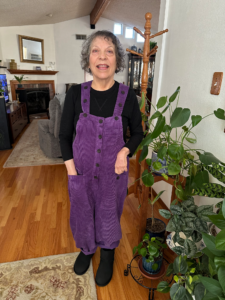
A recent photo of the author in the beautiful home she shares with her husband.

A recent photo of the author in the beautiful home she shares with her husband.

I am writing this post to all my readers to let them know that if you want to live on your own, in your very own apartment or home, you can. Even if you are quadriplegic or paraplegic, you can do it too. Of course, you’ll need to figure out the level of care you will need, but that is possible as well. You will have to be responsible for figuring out and determining your finances and the support you will need for yourself. If there is a will, there certainly is a way.

In my life, I really wanted to live on my own and be independent from my mother. Spiritually, she and I were interdependent, but in my daily life, I wanted to live on my own to see if I really could do it and succeed and be independent from my loving mother. I had to prove this to myself. I wanted to reach for the stars. Although, I had to take many more steps to get to that place in my life. Nonetheless, I knew in the innermost parts of my being it was possible. These charged mindsets made the palms of my hands damp. I knew, from the foundation I got as a child, that if I worked hard, did the legwork, and made a sincere effort to make it happen, anything was possible. I shivered with these new concepts: fear and promise mingled. Something within the deepest part of my soul was becoming clear. So I increased my space to think things through. I had to be alone. Totally alone. Still. Quiet. With no interruptions.

My point is that success starts and comes from a dream and belief within yourself. It takes courage in yourself to be brave enough to conquer anything of importance. It’s healthy. I held myself close. I said, “I can do this, Karen.” In that moment, the corners of my lips brought on the biggest, most courageous smile I had ever had.

If I were determined to make this conscious decision for myself, I would be able to manifest any other healthy thought I had in my consciousness. I would become the strong person I wanted to be. Then, and only then, would I be able to face my fears. Grow emotionally. And become strong. Attaining that desire would become feasible and attainable. Not to mention, it would lead to other life-altering achievements.

I think the way I do today about this subject because everything I accomplished in my life’s journey results from this type of pioneering thinking. This type of judgment made the following happen:

I learned to dance with a brace on at the young age of three.

Then, I listened and learned, teaching myself to read.

Followed by becoming valedictorian and giving a speech during my high school graduation.

Still reaching for possibilities, I worked. Held down jobs. Faced adversity and ableism head-on. And grew up mentally and emotionally. As well as facing being labeled mentally retarded on three separate occasions, then being commanded to work in a sheltered workshop, Handcraft Industries, when I was only eighteen, fresh out of high school. I learned what justice was and what taking action meant. It surely didn’t mean sitting on my laurels. That’s for sure, or folding boxes with one hand, all day long, like they had me do for six months.

Next, I became a switchboard operator, a recreation director, and, in 1975, a dance and fitness instructor specializing in teaching chair aerobics to people with disabilities. This was my ‌original idea. In 1979, I won the first civil rights case for my own education. I went to college and attained my Associate of Arts degree in 1985. I fought for my own civil rights and won. I advocated for myself and others, and now I am a storyteller.

Out of impossible odds, I did the impossible.

I know it can be done. I am living proof. When anyone told me I couldn’t reach my goals, I proved to myself that I could and followed through to make it happen.

What is the first step you are going to take? Will you follow through and make it happen?

Text and image ©2026 by Karen Lynn-Chlup. All rights reserved.

#disabilities #independence #


Fighting to Exist

Photo of Roman statue of Atlas (2nd century AD). Already in the Farnese Collection, today at the National Archaeological Museum of Naples.

Roman statue of Atlas (2nd century AD). Already in the Farnese Collection, today at the National Archaeological Museum of Naples.

I’d barely been born and already had to fight to remain alive. That was seven and a half decades ago. Although it seems like yesterday that it happened. Sometimes a lifetime of achievement can be reduced to symbols or markers, to jarring memories of traumatic experiences. But after each of these, I connected with the universal harmony by walking in the sand, near the water, in contemplative thought, uniting with the rainbows above.

In the early 1950s, there were three vaccines routinely given to infants. They were for diphtheria, pertussis (whooping cough), and tetanus combined into a single shot (DPT), to be given in two doses. Being a responsible parent, my sweet, progressive mama Katie got me my first DPT vaccination in 1951.

Although I had a slight reaction to that first dose, I bounced back like a basketball—eyes wide open, cooing with contentment, and eager to take on the world.

Then, five months later, highlighting the inevitability of my human limitations, I got ill, ran a high fever, and fell into a deep coma. This was after my second dose. The doctor gave it to me against my mother’s advice, even after she reported my reaction to the first shot. The difficulties that came out of that illness would make me fight for my life. And so, not knowing what strong and persistent effort was at such a young age, I continued with a smile and worked through my disabilities, one at a time. I became unstoppable.

It would have been convenient to drown everything out, but I was driven to do everything anyone told me I couldn’t do. I had a mission. It was to be true to myself. I couldn’t live ‌a lie. Consequently, my whole life has been about speaking truth to power.

“I can do anything I put my mind to,” I told myself. That became my mantra, given from the inexhaustible universe. Facing the world’s stereotyping, oversimplification, and hypocrisy every day of my life, I met it all with temperance, grace, and kindness. Coming from the canopy near the stars, protecting me and giving me the strength to believe in myself, the universe fearlessly moved me forward with each flickering sparkle.

It wasn’t easy, believe me. Anyone who knows me knows I am not a quitter, that I take the bull by the horns and ride, holding on with my good right hand, searching with my heart and soul until I find answers and resolutions to my issues. As I respect innovative ideas, I encompass various dimensions such as special, cultural, social, and healthy thinking. I respect people’s differences and their backgrounds, thus embracing opportunity, encompassing it for all. I did that in an era that did not recognize these values.

With all my heart and soul, I gripped the hand of Atlas, with all the dreams and hopes of the world he supports. Organizational structures were not on my side, no matter how many boxes I checked. Often I felt like giving up and giving in. Yet, in the depths of my being, I would not.

I helped others to be brave, to have courage, no matter what. I stood the course. And, “I did it my way.”

Have you ever had the bravery to do something like this? Please share in the comments below.


Text ©2026 by Karen Lynn-Chlup. Image courtesy of Wikimedia.


Why Do We Say The Things We Mean?


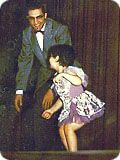
Photo of me with the late, great Al Gilbert, performing in my first dance recital at age three. This, after the experts said I would be deaf, dumb, blind, and completely paralyzed.

Me with the late, great Al Gilbert, performing in my first dance recital at age three. This, after the experts said I would be deaf, dumb, blind, and completely paralyzed.

“I’m a sick, disabled person. I have been since I was born. Please feel sorry for me!”

That is the image the world has been comfortable with, ever since I was an infant. But not me, and no one who knows me. I refused to play that game, working hard to overcome my disabilities.

Many disabled people, although, are comfortable because it is too difficult to make the change happen. Besides, many times, no matter how hard one tries, development doesn’t come at all. Thus, they stay in comfortable roles because it pays off.

“It’s too hard to do what they are asking of me. So, I will flap my arms and legs with uncontrollable outbursts.”

Their limbs tighten the more angry they become. Yelling and screaming, they even jump up and down in their wheelchairs. Many authority figures cater to those who come off this way, afraid of what may happen if they don’t give them what they want. They ignore ‌disabled people who act like intelligent adults who want to make their lives and selves better.

“I can act cute to get my own way and make them ‌feel sorry for me. I can even pretend I have a speech impediment. Or, I can look helpless. I can even behave in a way that suggests a false identity of myself just to get ahead.”

People like this would rather not face reality at all. They think through the roles they play to be pacified, and then act them out. Many of us, including myself, refused to play this game. Instead, we rolled with reality and reason. We showed the people around us that we didn’t have to act that way to function and live in this world. All we want is to fit into the landscape of society, earn a living, be accepted like everyone else and share our love, knowledge and compassion to others.

Looking at your own life, what is a small, concrete action you can take to prove your independence? Please share about it in the comments section below.


Text ©2026 by Karen Lynn-Chlup. Image ©2026 from Karen Lynn’s personal collection.


Women’s History Month

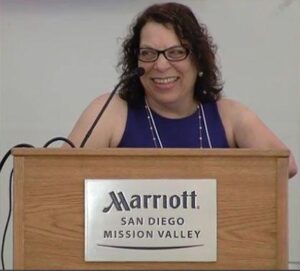
Photo of Karen delivering an inspiring keynote at a disability rights conference.

Karen delivered an inspiring keynote at a People First conference.

Did you know that Women’s History Month, also known as Women’s Contribution Month, is a month-long celebration of the women who have contributed to culture, history, and society? It grew out of a week-long exploration by dozens of children in Sonoma, California, who read essays of “Real Women” and paraded. This all started back in 1978. Then, in 1980, President Jimmy Carter issued a proclamation declaring the first week of March National Women’s History Week. Later, in 1987, he issued a second proclamation, expanding it to make the entire month of March Women’s History Month.

The achievements of women go back ‌more than a century. Then they wore corsets and long dresses with hoop crinolines designed to create a bell-shaped silhouette, with petticoats underneath. These were very comfortable. This dark outline showed off the lighter background and became very popular in the mid-19th century, particularly in the 1850s.

Being a dancer, when I close my eyes I imagine myself dancing in one of those ball gowns, pivoting and moving with grace and ease across the floor without a limp, my paralyzed left arm easily stretched out straight, holding onto my partner’s shoulder without difficulty or effort. I am ‌at peace, holding my stance in perfect position.

In my era, there weren’t many historic pioneers or trendsetters. Of course, there were Helen Keller and Jill Kinmont, who was an Olympic skier who had a life-altering accident, as depicted in The Other Side of the Mountain. There was also Judy Heumann, who was a disabled advocate who had been paralyzed by polio as a child.

Then, there was me. Still not known. But at peace with myself and a lifetime of achievements and helping others. My paralysis could have been a lot worse. I could have been deaf, dumb, and blind. Instead, I listened to my own rhythm. I defined my own life, my own destination, and my own healing by dancing through every storm. I defied the odds by living my life on my own terms.

In my own time and way, life presented me with a gift. I became an activities director, a fitness instructor for people with and without disabilities, and an advocate for the disabled. These careers were followed by me becoming a speaker and then a storyteller. At each crossroads, I saw tranquil trees and fluttering butterflies, while difficult situations turned completely around, growing from my positivity and optimism into reality. Feeling free and one with myself, like a once-injured bird flying away into azure expanses, documenting and journaling, looking for solutions, even when there didn’t seem to be any.


Text and image ©2026 Karen Lynn-Chlup. Image from her personal collection.


Happy Fourth of July! The Contributions of Women to America

In honor of our country’s 250th anniversary, I’d like to share with all my readers some contributions that several women have made to America.

Perhaps the biggest struggle remaining in this country is the advancement of inclusion for the disability community.

At their core, the American women I am about to discuss will leave you more committed to investing in life than you ever were before. It will expand your desire to keep going and challenging yourselves and to make possible societal transformation. These actions will invite you to become your best self. They will cause you to become engaged in making life better for you and for others in our world. Your determination and passion will become an offering and an investment in the world, as you long for it to be.

The first person we’re going to look at is Emma Lazarus. She wrote the poem that has stood on the Statue of Liberty since 1903. This poem symbolized the United States welcoming immigrants from around the world to its home. She showed her Jewish spiritual values.

As my grandmother used to say every day since she came to America to escape the pogroms of Russia in 1900, “This is the golden land. And we should welcome everyone with open arms, as we used to.”

We are now exploring Alice Paul, the woman who finally got the Nineteenth Amendment passed. This gave women the right to vote in the United States. She was so committed to that task that she endured imprisonment and forced feeding. Just as I endured a lifetime of mental, emotional, and physical demoralization.

Even though Karen Lynn-Chlup of Whispers of Hope crossed the emotional bridge by being labeled and facing the degradation and humiliation of it all and that horrible diagnosis—‘Mentally Retarded’—it affected her, rather than the entire country. There are strong similarities. Society limited voting for women. Society misunderstood immigrants. Society also misunderstood and still misunderstands the disabled population with cerebral palsy and a learning disability (dyslexia).

These organizations wanted and still want people with disabilities to be isolated outcasts, out of the public’s eye, isolated in workshops and institutions. Those two women taught me how to fight the good fight and stand up for myself in a world that did not accept me at all. I would not be the example and person I am today if it were not for these women who came before me. They gave me the courage and strength to move my own life’s mountain forward. That gallantry gave me the fearlessness to inspire the men and women, brothers and sisters around the world who have come after me to do the impossible and believe in themselves.

In this world today, we must look at the past in order to learn from and move through our lens of discrimination. For the last seventy years and more, we have fought the good fight but never really resolved any of the issues at hand fully. The struggle has continued because the experts refuse to acknowledge that they are wrong or when they are wrong. And they refuse to understand that the person living with the disability actually knows more than they do, despite their advanced education.

In order to become a more perfect person and union, we must protect, practice our principles, and recognize the contributions of many people. By demonstrating these principles, we are creating a more perfect union.

Each has led us in our country, rededicated themselves, to living up to the country and its best self.

Have you stood up to adversity? Are you transforming your life or someone close to you? And, are you making a difference and contributing to society’s causes? Bravo to all of you! Keep doing the very best you can. One day it will come to pass. That’s all that any of us can do. Right! I am confident that your actions are making a huge difference. If you have contributed, please share with our community in the comments below.


Text ©2026 by Karen Lynn-Chlup. Image courtesy of Wikimedia.


With True Courage and Resolve

Grown-up Karen Lynn delivering a keynote speech at a conference

I am going to tell you a story about myself that will blow you away. This actually happened to me fresh out of high school. I was only eighteen years old and still finding my voice. At that moment, I knew that once this workshop trial period ended, that was it. I would never settle for a life that limited my potential.

This happened back in the fall of 1969. First, I was tested and labeled mentally retarded after I was given an IQ test that did not measure my intelligence accurately because it did not take my dyslexia into account or allow me extra time to comprehend the questions.

After grading the test, the counselor who had administered it said, in a brisk, haughty manner, ”You are going to Handicraft Industries. It’s a workshop for intellectually disabled people. They’ll take good care of you.”

I didn’t like the taste of what he had said. It smelled rotten all over. But I was willing to consider new ideas with an open heart and learn from this experience. So, I went and worked there for six months.

However, after spending a week in that place, I said to myself, “I am going to rise above the feeling of defeat that I feel right now. I will not be intimidated by so-called experts. I’m smarter than they think. I’ll be damned if I wind up in a sheltered workshop folding boxes with one hand for the rest of my life. Once this probation period is over, it’s over. I will never be humiliated like this again.”

After reading this post, you will understand why I did this. It’s been a journey to make this world a better, kinder place. My fight has never been in vain. It didn’t always end in a desirable, lasting way. But instead, each experience built my character. After all these years of fighting the good fight with guts, grit, and humility, my willingness and determination took the world by surprise. I won over life with ‌mental and moral inner strength, resilience, and ‌bravery, which showed my light.

As I soared, so did my confidence and voice. I now had a firmness of will in the face of extreme difficulty.

Because of these firsthand experiences, I pursued a career finding new ways to help in the disability movement. I took the California Department of Rehabilitation to court. After three years of litigation, I won the first civil rights case (in California) for my own education under section 504 of the disabilities act of 1973, which not only allowed me to go to college, but opened the doors for all disabled people wanting an education. The discrimination didn’t stop there, though. Two more times, this same organization labeled me mentally retarded, stopping all my higher education, but I seized the moment and held firm. My dreams went full steam ahead, and I won.

Throughout my life, I have grown to believe that anything is possible. I turned every negative experience into a positive one, turning hurt and pain into happiness, healing my mind and body. I had to believe in myself. And I have used my “I can do anything” attitude during incredible situations, becoming more fearless in each one than before. I did what I had to do to thrive.

I always listened to my inner self, and I told myself, “All I wanted was to be able to live my life like any other human being here on earth, with meaning and purpose. I will not let anyone take that away from me.”

So I kept doing the impossible…

Who would have thought that my life would make such a difference? I was once a tiny infant, stricken at the tender age of five months old after being given a ‌vaccine. Even after my mother told the doctor that I’d had a bad reaction to the first shot, he gave me the second one anyway. And then when I went into a coma, my mother was told that I only had a thirty percent chance to live and that I would be deaf, dumb, and blind. Ten days later, I awoke from the coma with left-side hemiplegia. What a miracle that was, that I awoke, but sentenced to partial paralysis on my left side, a sentence that has lasted a lifetime. But instead of giving up, somehow I kept moving forward, even at that age. I remember thinking a few years later, “I can do this. I have to get through this with a smile like Al taught me.”

I also remember having a stabbing feeling in the pit of my stomach. It kept urging me on. Since I had never felt anything like this before. I listened carefully. I knew that I would have to do things differently. If I took on‌ too much, it would be overwhelming. Hence, I learned to take one baby step at a time. Facing life’s trials, I grew stronger in every way. I gave myself the authority to emancipate and empower my life. I became impassioned in pursuit of a cause. I stood erect and upright without folding. I used my voice in tumultuous situations, never giving way to pressure, standing my ground. Thus, dedicating my life to others by becoming an advocate at the young age of seven, using my voice to help others with disabilities and giving encouragement and hope. I treated all people with dignity and respect.

My rationale for these feelings comes from a lifetime of non-stop struggle leading to achievement. Truthfully, I wouldn’t settle for the crumbs the experts wanted to give me. I wouldn’t let them destroy my life. I wanted to follow my own destiny.

I have spent my life accomplishing what seemed like an impossible dream.

Have you done something in your life to feel good about yourself and to pass it on to others? Please share in the comments below.

Meanwhile, here is a poem.

Tireless Support

In the face of adversity

I stand at attention.

I stand for justice.

I stand for human rights

And hold my head up high.

In the face of adversity

I stand for truth.

I stand for fairness.

I stand for what is right

And hold my head up high.

In the face of adversity

I stand for bravery.

I stand for ‌firm confidence.

I stand for having good, sound judgment

And hold my head up high.

The only way I do these things

Is with an open mind,

A compassion for others

A willingness to talk things out

And with an open dialogue without prejudice.


Text and image ©2026 Karen Lynn-Chlup. All rights reserved.

One Woman’s Courage: Bad Experiences with Medics

Photo of Karen's YMCA employee ID card

This ID serves as evidence of both my achievements and my teaching skills. The YMCA hired me as an instructor.

“I don’t want this surgery, Mommy.”

In our home, sitting on our couch, I was only eight years old, but looking up into Mama’s compassionate eyes, I knew that, regardless of what the physicians wanted, I had to speak up before it was too late.

“I don’t want to be like that boy in school who had the same thing done. Now his wrist dangles like a pendulum, and his hand is completely…”

My voice trailed off. Useless would have been too cruel a word, but I had seen what the doctors could do, and what they had done, cutting tendons and destroying any chance of future improvement, of future healing. I swore to myself that I would not let them have their way with me.

That was in 1958, and since then medics have treated me with little care and less kindness. But through these life lessons, I have become a voice for humanity by speaking up for myself and others. More importantly, I have helped people with disabilities find their voices and advocate for themselves.

My struggle to free myself from the constrictions of my disabilities stemmed from humiliation and degradation. This article is a factual account of events that took place between 1951 and 2025: a lifetime of speaking up and out. And remember, I was a healthy baby until a medical doctor insisted I have a second DPT shot even after I had had a bad reaction to the first shot. The second one put me into a coma and gave me CP and dyslexia.

Because of these injustices, I became an advocate. I wanted to give back to others so that no one else would have to experience what I did, so everyone would have the information to not only speak up in a dignified manner, showing composure that is worthy of respect, but also receive the care they need and deserve, like anyone without a disability.

However, I did not want to become bitter. I wanted to find resolution with a clear mind and a loving heart. These matters took forgiveness and commitment. Thus, I worked tirelessly for people and their civil and human rights. Since I had no choice but to face a myriad of challenges, I accepted them with resilience. I had the mindset and capacity to spring from stress. I had learned to adapt to discrimination throughout my life. And with unflinching firmness of purpose, I came to a reckoning, to a judgement and assessment, to a moment of truth and a realization when I knew, like Rosa Parks, that I had to decide. I had to move forward.

I reached a resolution. From the start of my existence, I learned to assess and evaluate. When I was talked down to, minimized, and patronized, I heeded and listened to the un-true remarks from doctors who tried to run me through the mill. They thought they could get away with their actions. They thought they knew it all.

In my adulthood, I taught the doctors how to respect me. In the 1990s, I saw a doctor who looked at me during my initial healthcare visit and said,” You’re doing real well for a person with cerebral palsy.”

I taught them by personal experience and example, as I didn’t want to be judged from first impressions. I did not want to be taken at face value if their opinions did not reflect my personal self. I didn’t want to be talked to in a degrading way. Thus, calmly, I spoke with a balanced approach. My emphasis was on my demeanor, the importance of thoughtful responses, and on controlling my stress through emotional regulation. I stood tall and boldly asserted myself in a time when that wasn’t accepted. I wanted to be heard honestly by the closed-minded white-coats.

Through their thoughtless discounts, they showed they didn’t want to listen, so I had to speak up for myself to get my choice of medical services.

“I get to choose for myself,” I said with conviction. “I get to choose how I want to be treated and the medical treatment I want. I get to choose how I want to define myself, not you. It’s me against you.”

I sat straight, grimacing as I confronted my conflict with rivalry.

I continued. “Doctors should not have the power to decide what kind of care and courtesies of care we get by the status of our insurance cards.”

Subsequently, attitudes have changed somewhat in the last five years. Obviously, we have a long way to go, but individuals don’t regard doctors as gods in lab coats anymore. Nor will patients let doctors override their judgement. Patients demand an honest, open, and truthful approach, with a thorough discussion and explanation. In other words, we are getting smarter as patients and will not accept being treated disrespectfully, talked down to, or belittled because we are disabled, not on a PPO, or are black, brown, Jewish, or in another minority group.

We won’t have surgery done unless absolutely necessary. We want a more comprehensive, integrated approach altogether, but insurance companies and big businesses try to shut out homeopathic and naturopathic medicine because the big bucks are with the MDs. People are demanding to be heard and treated holistically. Doctors are being held more liable than ever for their conduct and ethics. Patients are demanding answers, truth, and explanations of their standards and moral code.

Through the decades, I have labored to master the sublevels of the medical profession. With every call I took part in, I used my voice to make medical treatment more accessible. I devoted my life and went beyond the call of duty. Then, in 2019, I not only broke my right wrist (the only hand I use), but I also took the COVID vaccine and had terrible side effects from it.

The day after taking the shot, I noticed a lump under my arm, and then my hypoglycemia, which had been under control for over fifty years, turned into diabetes. Since that time, I have been struggling to regain my health.

In 2020, I went to another doctor because the previous two told me, “You’re going to dry up.” They thought I would go into ketoacidosis and kidney failure. The third told me, “If you don’t do it my way, then I’m not working with you.”

The third, the worst of them all, said, “You’re going to die the moment you walk out of my office. You are not like other CPs.”

Watching from across the examination room, she glared, ready to strike again like a rattlesnake. But I remained still even though in my imagination I visualized the rattler turning toward her. But instead of lashing out, I took a deep breath, stood, and politely took my leave, if only to regain my resolve and composure. It was my life, and I needed to control my emotions.

With my head held high, I walked out of that doctor’s office knowing I would face this harrowing experience over and over again as I strove to get the medical care I paid for, and that I deserved as a living human being.

These Western doctors are unaware, valuing their knowledge over my lifelong understanding of my body and its sensitivities. Instead of addressing my physical problems, they insist on in-person visits.

In another instance, I said emphatically, “I don’t need to come in person; I’m fine on FaceTime. Why won’t you just let me do it at home?”

The nurse who called me said, “They want a hands-on blood pressure test.”

But that’s when my blood pressure escalates. It rises because I don’t trust them after all these years of untruths and manipulation instead of giving compassionate care. They are incapable of maintaining emotional balance. They lack the empathy to resolve conflicts with patients. Despite the broken wrist on my one functioning hand, they subjected me to many tests, unaware of the discomfort and pain involved. Still, they kept prescribing drugs with side-effects.

What kind of doctors have we educated throughout the years? What kind of souls do they have if they don’t even know how to be kind and understanding?

The doctor who told me I was going to die the moment I exited her office said, “You have a different kind of CP than them. So we insist you come in.”

What kind of knowledge have they gained in the past seventy-four years? Nothing.

Is it all about money and prestige? Even more importantly, is the treatment you get limited because of the medical plan you chose or could afford to choose?

While doctors possess technical education, they have sacrificed their humanity. What happened to their common sense? They have no compassion, let alone any bedside manner. They try to fix everything with pills, even if you tell them you are allergic or prefer other methods. They have lowered their standards for that reason alone! And now, they mandate you to come in every year for an annual exam, whether you want to or not.

And if you don’t come in for an annual wellness exam, they actually say they will come to your house or give you a coupon to buy something. They are stooping to these levels.

They look at you as if you are a subject and number, with scorn and ill-will, as if you have lost your mind. They document every word you say, but they are not transparent and write untruths in your medical records. Still, they think it’s okay if they get away with it. It is not a viable solution to hand out pills like candy, using the new protocols to hand out all kinds of deadly, addictive medications for any reason under the sun, to keep you coming back. Meanwhile, you get sicker and prescribing the drugs fills their pockets.

Despite that, not one single red flag comes up. They don’t seem to show an ounce of emotion or say, “Hey wait a minute. You just said you are sensitive. Let’s do something different. It’s more of a natural approach than what I wanted, but it may be better for you.” It doesn’t even matter to them, nor penetrate their minds. They have been trained to be hardened, insensitive, and unyielding. It doesn’t matter what you say, even if you tell them differently and beg.

Conveniently concealed, safe in their offices, they refuse to acknowledge and address patients’ genuine feelings and issues, so their patients can heal naturally. They disregard it with a vengeance when you know more than them. They give you no reason to trust them–not a glimmer–not a glance. Not even a look of sensitivity with their eyes or facial expressions that they acknowledge and hear you.

My reasoning is based on a lifetime of personal experience. After seventy-four years of being on display, and being poked and prodded, I just want a little comfort, care, and understanding. I don’t want to march to other people’s drummers, or be tormented or pressured. I just want a little peace and quiet to live my life. I don’t want to live forever taking a remedy they want to give me for their own agendas, but that leaves me with no quality of life.

Each of us can and must decide our plight in life. It is up to us to decide. Perhaps our ancestors had it right all along, choosing to die at home surrounded by love and our loved ones, not between cold, sterile hospital sheets, attached to a ventilator and life support.

What has your experience been? You must still be alive to read this, so please share.

For more about what your doctor really thinks about you, read this study:

Doctors Overwhelmingly Harbor Negative Views Of Those With Disabilities, Study Finds

Text ©2026 by Karen Lynn-Chlup. Image ©2026 Karen Lynn-Chlup, from her personal collection.

Apologies from the Editor

Hello everyone. This is Karen’s editor writing. I have had some health issues since December of last year, and so I have not been able to stay on schedule. Please be patient. I am feeling better and hope to resume regular postings during the rest of April.